
Kempton Yard
In 1963 the new WK&S Kempton Station was located in what was nothing but an empty field. The only existing infrastructure was the main line and a long passing track that was used to store potato cars. Potatoes were a big area commodity back in the day. In 1964 the WK&S constructed a crossover between the main line and the passing track thereby dividing the passing track into a southern or lower passing track and a northern or upper passing track. Also in 1964 the "back track" was built behind Kempton Station. The back track was originally built for a static display of equipment called the Museum Train and was a stand-alone section of track. By 1967 the "hole track" had been built. The hole track angels off the main line from in front of station and connects the main line to the back track via a switchback configuration. Beginning in 1971 the pit track was built next to the lower passing track. The pit itself was built in 1973. The pit track switch was salvaged from the south end of the passing track in downtown Kempton. The pit track project was probably complete by 1974. The yard configuration described above remained unchanged until 2004 when a new project was begun to get track into the new shop building.
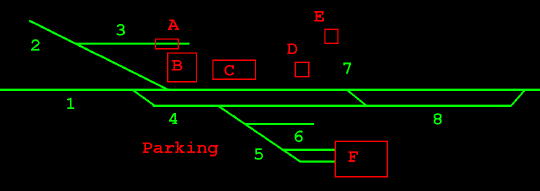
1. Main Line
2. Hole Track
3. Back Track
4. Lower Passing Track
5. Shop Tracks
6. Pit Track
7. Crossover
8. Upper Passing track
A. Model Railroad Car
B. Station
C. Gift Shop
D. Refreshment Stand
E. Restrooms
F. Shop
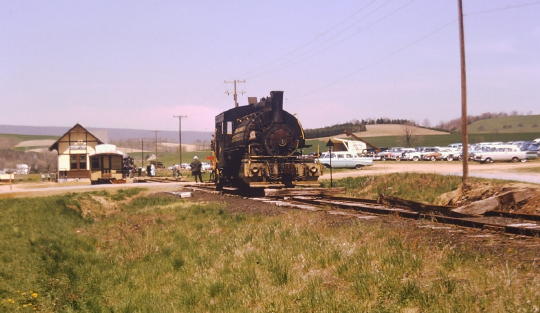
Click for larger image. Storage space was scarce in the spring of 1964. There's no back track, no hole track and no pit track. Inoperative #3 was simply shoved to the far south end of the line. Crossties separate WK&S trackage from the Reading Company.

The next picture is from a September 1971 newspaper clipping. The background is more interesting than the foreground. It shows the Berksy Trolley under construction and sitting on the beginnings of the pit track. The pit and pit track switch have yet to be build.
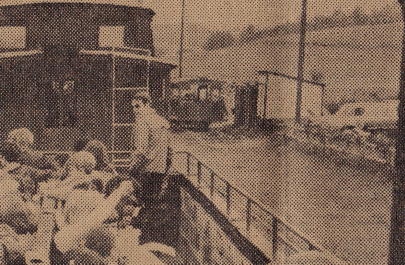
Beginnings of the pit track.
Shown below is a view looking south from the pit track. This picture is from before the 2004 project to realign and lengthen the pit track. The train sits on the main line with the refreshment stand to the right of the caboose and the station and the gift shop to the right of the coaches. In the background, the cupola of another caboose is visible on the hole track. Downtown Kempton is out of picture further down the main line.

Kempton yard looking south.
Here's a shot looking up the hole track from behind the bump stop. On this day the hole track is oddly devoid of stored equipment. The caboose is located where the hole track converges with the main line. The model railroad car #72, box car #5504 and coach #1365 sit on the back track behind the station. A plume of smoke indicates #65 at the water plug. Newly acquired GE center-cab #734 sits on the main line at far right.
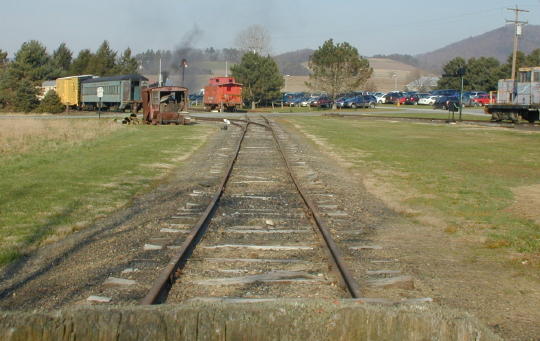
The hole track.
At the beginning of September, 2004, WK&S crews began the long awaited task of building track into the shop building. Work was completed in two phases over about three years.

Early construction on the shop track project.
Two separate pages detail the shop track construction project. Click the links below for more pictures and information.
Phase I: 2004
Phase II: 2005/06
On September 15, 2012 a WK&S track gang rebuilt the south switch on the lower passing track including new throw linkage with a spring mechanism. The crossover switches had been sprung about ten years before. These three spring switches allow a locomotive to be run-around the train at Kempton without having to manually throw any switch.
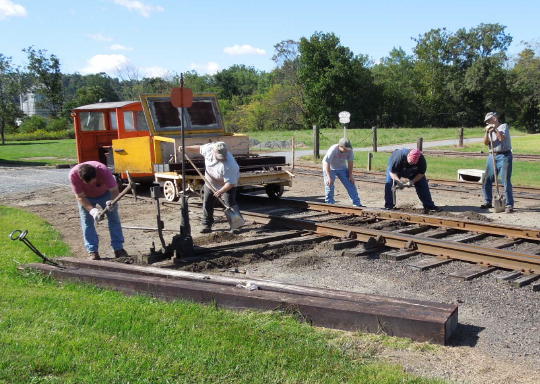
Upgrading the southern switch on the lower passing track.
The two pictures below are aerial shots of Kempton showing the railroad facilities of 2006 compared to 1937.

Click for a much larger image of WK&S facilities and the town of Kempton from around 2006.
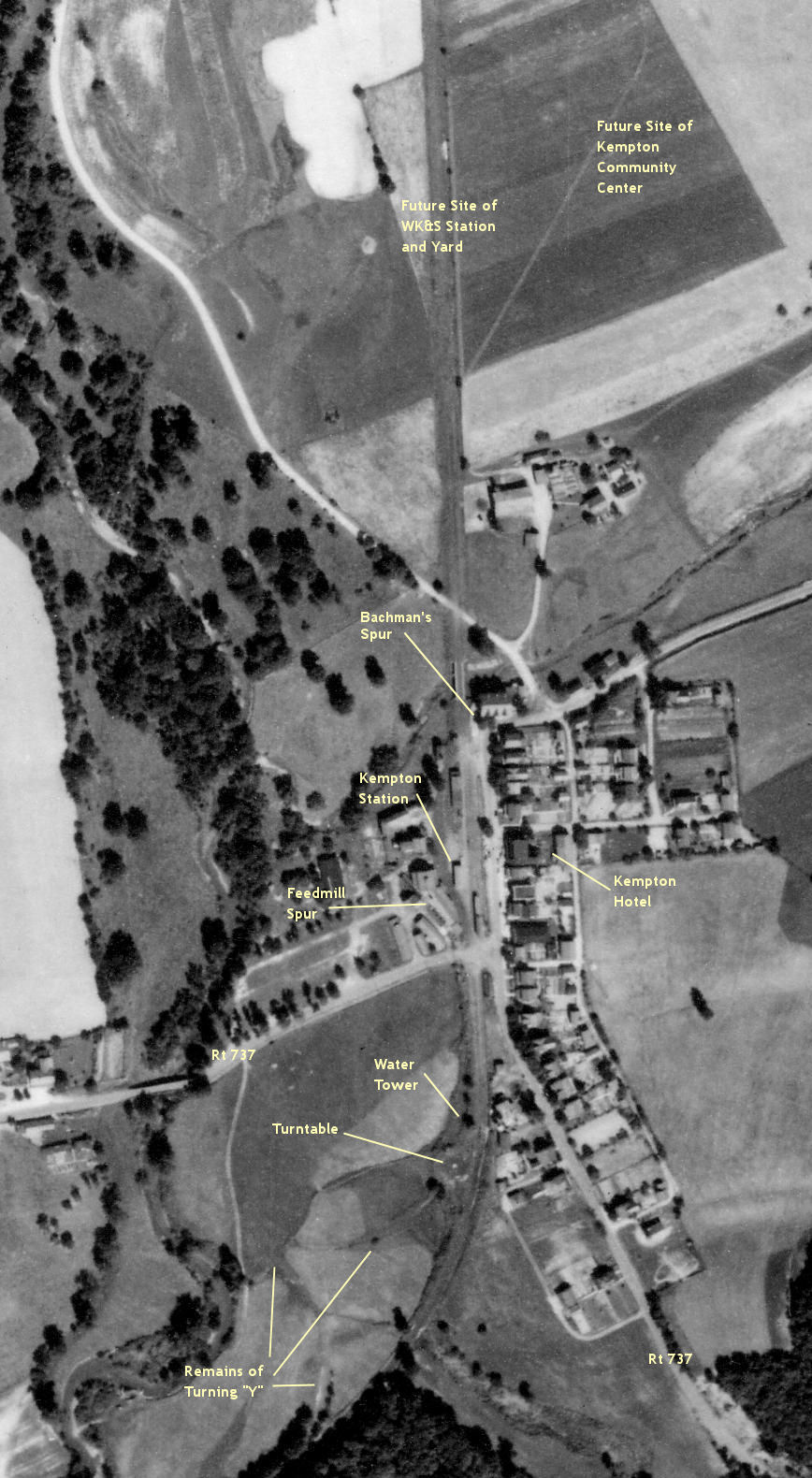
Click image for a similar view from 1937.
Below is another aerial picture. This one's from March 21, 2009. The Kempton Community Center is at left. The annual Farm Sale is in progress. This is perhaps the largest, longest running annual event put on by the Community Center. The railroad facilities are in the center of the picture. The WK&S is closed for the winter. Note the consist of coaches on the hole track which is still configured from last December's Santa trains. The town of Kempton is at right.
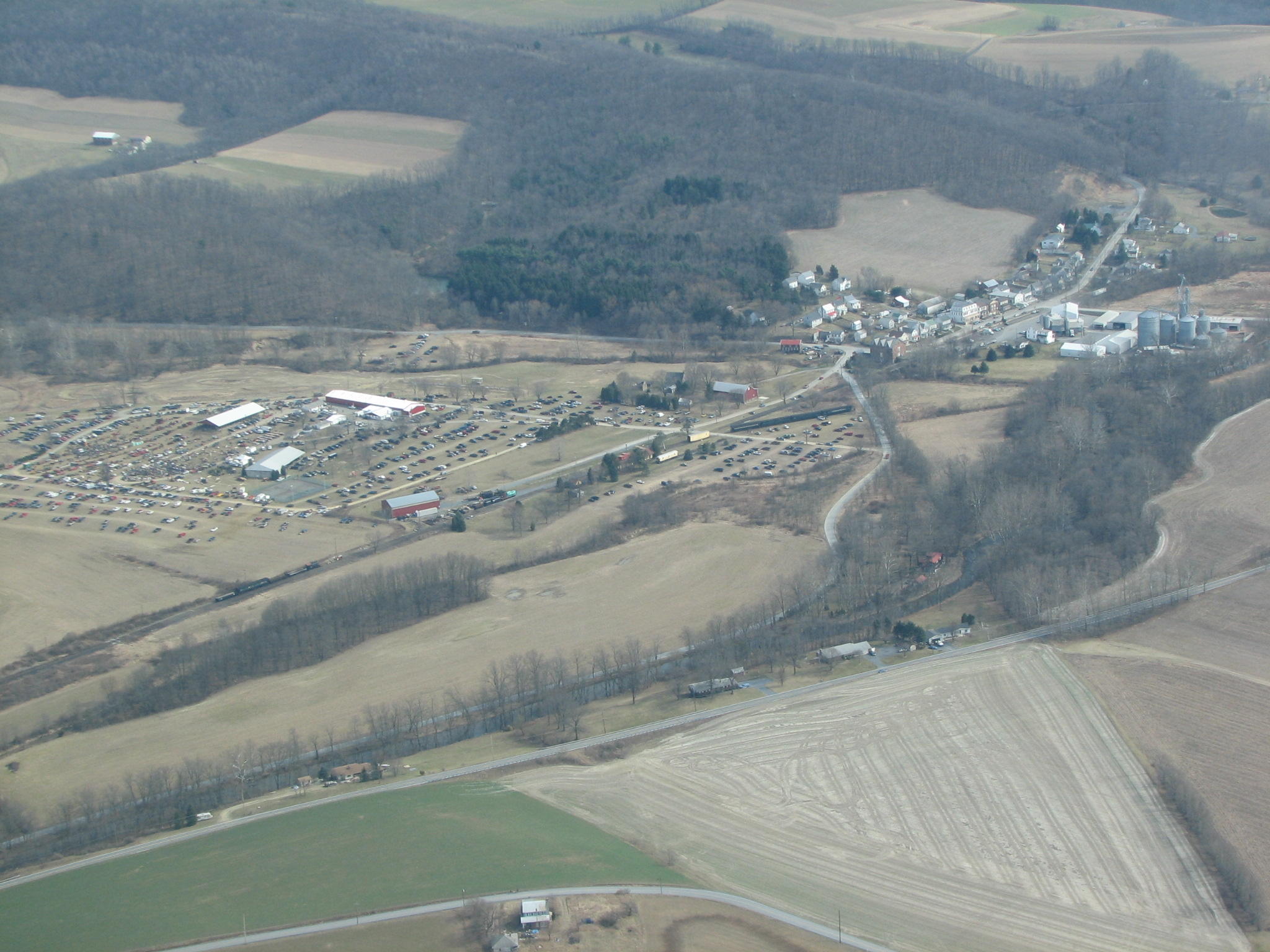
Click image for a super huge picture. Photo by Tim and Nick Conrad.